On point
LITIGATION AI BUYERS GUIDE
AI for Litigators and the Best AI for Litigation Tools Priced by Job
What a US litigation firm actually pays for AI in 2026, split by the job each tool does: finding authority, checking a brief, reading a judge, or drafting with a platform AI.
US firms · Research tool, not legal advice
CaseSearch research console
Federal + state
|
Try:
Reading opinions
Finding the authorities that answer your question...
Sample answer. That question is outside the worked examples this preview ships with, so the authorities below show the format rather than an answer to what you typed. Pick one of the example questions above for a fully worked result.
Controlling statute
The controlling statute is surfaced alongside the case law so you read the code and the precedents together.
Plain-English answer
Research memo
- Question
- Short answer
- Authorities
CaseSearch shows you the sources. Always read the full opinion and verify citations before you rely on them.
The short answer
The best AI for litigation depends on the job, because no single tool does all of it well. For finding controlling case law, self-serve AI research runs 24 to 100 dollars a month (CaseSearch from 24 billed yearly, Midpage 100). For checking a brief before filing, BriefCatch starts at 60 dollars per seat a month and Clearbrief at 300. Westlaw sells generative AI research online from 170.95 a month (Edge with AI-Assisted Research, one attorney, three year term) and Westlaw Advantage, with its litigation document and complaint analyzers, from 288.60. A LexisNexis store version in testing prices Lexis+ with Protege at 495 per attorney a month. Judge analytics and outcome prediction (Lex Machina, Pre/Dicta) are quote only.
$24
a month, the lowest published AI case law research price here (billed yearly)
$60
per seat a month for BriefCatch, which includes its RealityCheck citation checker
$288.60
a month for Westlaw Advantage, one attorney, one circuit, three year term
$1,800
per case, the only published Pre/Dicta figure (annual 50 case subscription)
Side by side
Every job a litigator buys AI for and what each one costs
Prices are the vendors' own published or configured figures where one exists: Westlaw from Thomson Reuters' online plans configurator (law firm, new customers, 1 to 10 attorneys), Lexis from its store, BriefCatch and Clearbrief from their pricing pages, Trellis and Docket Alarm from theirs, Pre/Dicta from its LawNext Startup Alley profile. Checked September and October 2026.
| Litigation job | Tools | Published price | Best for |
|---|---|---|---|
| Find controlling case law | CaseSearch, Midpage, Paxton | CaseSearch $49 a month or $24 billed yearly; Midpage $100 a month; Paxton $499 per user a month | Motions and oppositions where the question is which cases control and whether they still stand |
| Research on a full platform with AI | Westlaw Edge with AI-Assisted Research, Westlaw Advantage, Lexis+ with Protege | Westlaw AAR from $170.95, Advantage from $288.60 (one attorney, 3 year term); Lexis+ with Protege $495 per attorney (store test, 3 year term) | Firms that also need headnotes, secondary sources and a citator in one contract |
| Check a brief before filing | BriefCatch, Clearbrief, Westlaw Quick Check | BriefCatch $60 per seat a month billed annually; Clearbrief Solo $300 a month; Quick Check is a Westlaw Edge feature (the all states plus federal plan lists all five Edge features) | Catching bad or weak citations, including AI hallucinations, before the court does |
| Read the judge and the court | Lex Machina, Trellis, Docket Alarm | Lex Machina quote only; Trellis from $69.95 a month; Docket Alarm $99 per user a month flat fee | Venue choice, motion strategy and budgeting in federal and state court |
| Predict a motion outcome | Pre/Dicta | $1,800 per case on an annual 50 case subscription; site shows Book a demo | Large firm litigators, law departments and litigation funders pricing risk |
| Draft and review documents with AI | CoCounsel Legal, Harvey, Clio Work | CoCounsel Legal priced in TR's online configurator; Harvey quote only; Clio Work launched at $199 per user a month | Firms that want one assistant for drafting, review and research |
Prices change and several vendors quote by firm size, jurisdiction and term, so confirm on the vendor page before you sign. Westlaw and Lexis figures are per month for one attorney on a three year term. CaseSearch is a research tool, not legal advice. Read every opinion you cite.
What is the best AI for litigation?

The best AI for litigation is the one that matches the job in front of you, and most litigation teams end up with two tools, not one. A research tool finds the controlling authority and tells you whether it still stands. A brief checker reads the finished draft and flags citations that are wrong, weak or invented. Platform AI from Westlaw or Lexis bundles both, plus secondary sources, at a much higher price and on a multi-year term.
A useful way to decide is to price the job you do most often. A two-lawyer plaintiff firm that writes three or four oppositions a month needs fast, cited case law and a good-law check far more than it needs a judge analytics dashboard. A defense group handling fifty federal cases a year may justify Lex Machina. Buying the biggest bundle for a narrow need is the most common way litigators overpay for AI. Plaintiff firms weighing medical chronology and demand platforms should also read our <a href="/ai-for-personal-injury-lawyers">AI for personal injury lawyers</a> pricing comparison. Family law firms, whose research turns on state custody and property decisions, will find the calculators and drafting tools priced in <a href="/ai-for-family-law">family law AI</a>.
Mostly motions and oppositions
AI case law research, from $24 a month.
Heavy briefing, high stakes
A brief checker on top, from $60 a seat.
Need headnotes and treatises too
Westlaw or Lexis with AI, from $170.95.
Venue and judge strategy
Analytics, from $69.95 a month to a quote.
How much does AI for litigators cost?
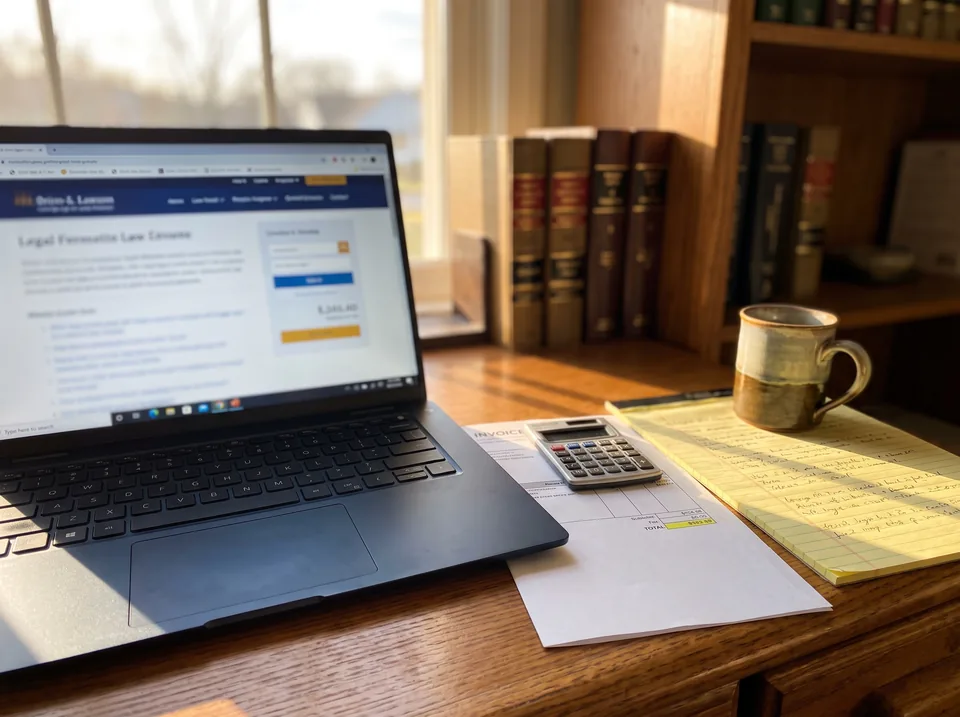
Published prices run from 24 dollars a month to well over 1,000 per seat, and the spread comes almost entirely from what sits underneath the AI. A self-serve research tool that searches court opinions is the floor: CaseSearch at 24 a month billed yearly or 49 month to month, Midpage at 100 a month. Paxton, which adds drafting and document analysis, lists 499 per user a month or 2,999 a year.
Westlaw prices its AI online for firms of one to ten attorneys. On a three year term for one attorney, Westlaw Edge with AI-Assisted Research starts at 170.95 a month for a single circuit and Westlaw Advantage at 288.60, rising to 447.85 for all states plus federal. A LexisNexis store version in testing prices Lexis+ with Protege at 495 per attorney a month on a three year term. CoCounsel Legal shows its price only after a two step configurator, and Harvey publishes none; third party reports put Harvey in the region of 1,000 dollars or more per seat with seat minimums.
Floor
AI case law research, $24 to $100 a month.
Westlaw AI
$170.95 to $447.85 a month, 3 year term.
Lexis+ with Protege
$495 per attorney a month in the store test.
Enterprise AI
CoCounsel Legal configured, Harvey quote only.
Which AI litigation tools check a brief before you file?
A public database of AI hallucination cases listed 2,097 court decisions on October 1, 2026 in which a court found that a party relied on made-up material, so a citation check before filing is no longer optional for anyone drafting with AI. BriefCatch includes its RealityCheck citation checker in every plan, from 60 dollars per seat a month billed annually, with a Pro plan at 75 dollars and a five seat minimum. Clearbrief lists a Solo plan at 300 dollars a month and also checks citations to the record and exhibits, which matters in record-heavy motions.
Inside Westlaw, Quick Check reads an uploaded brief and suggests authority you missed, and Westlaw Advantage adds the Litigation Document Analyzer for the other side's filings. A brief checker tells you a citation is bad. It does not find the case that should replace it, which is a research job. Our <a href="/ai-citation-checker">AI citation checker comparison</a> prices eight of these tools and our <a href="/brief-analyzer">brief analyzer guide</a> covers the platform options.
BriefCatch
$60 per seat a month, RealityCheck included.
Clearbrief
$300 a month Solo, record citations too.
Westlaw
Quick Check in Edge plans, document analyzers in Advantage.
Can AI predict how a judge will rule?
AI can estimate it, and two kinds of tool sell that estimate. Judge analytics, from Lex Machina, Trellis and Docket Alarm, count what a judge has actually done: grant rates on summary judgment, time to ruling, how often a motion to dismiss succeeds in that courtroom. Trellis publishes plans from 69.95 a month per state; Docket Alarm charges 99 per user a month on its flat fee plan; Lex Machina is quote only.
Pre/Dicta goes further and predicts a specific motion outcome from the judge's background and the parties, claiming 85 percent accuracy on federal motions to dismiss. Its only published price is 1,800 dollars per case on an annual 50 case subscription, so it is priced for large firms, law departments and litigation funders rather than small firms. Neither kind of tool writes the argument. Once you know the judge grants these motions half the time, you still need the controlling cases that move your motion into the right half. Our <a href="/lex-machina-pricing">Lex Machina pricing</a> page compares the analytics plans in detail.
Count the past
Trellis $69.95 a month, Docket Alarm $99, Lex Machina quote.
Predict the motion
Pre/Dicta, $1,800 per case.
Win the motion
Still needs the controlling case law.
Is AI legal research reliable for litigation?
It is reliable when every answer is tied to a real opinion you can open and read, and unreliable when it is not. The Stanford RegLab study published in the Journal of Empirical Legal Studies measured Lexis+ AI, the predecessor of Protege, at 65 percent accuracy with a 17 percent hallucination rate, and Westlaw AI-Assisted Research at 42 percent accuracy and 33 percent hallucination. General chatbots did worse. There is no independent measurement yet of the newest platform assistants.
The practical rule for a litigator is simple. Use AI to find and rank authority faster, then read the opinion, confirm the holding says what the summary says, and check that the case is still good law before it goes in a brief. A tool that hides its sources makes that impossible, so pick one that shows the citation and the court for every answer.
Trust
Answers tied to a citation you can open.
Verify
Read the holding, not only the summary.
Check
Good-law status before you file.
Where CaseSearch fits for litigators
CaseSearch does one litigation job: finding the decisions that control your issue. Ask in plain English, for example whether courts in the Fifth Circuit have dismissed a FLSA collective action for failure to plead a common policy, and you get the on-point decisions with their citations, the holding in plain language and a signal showing whether each one is still good law. That is the research behind a motion, an opposition or a reply.
It does not draft the brief, review discovery or score a judge, and it is not legal advice. It costs 49 dollars a month, or 24 a month billed yearly, with no sales call and no multi-year term, and one real question at the top of this page runs without an account. Many small litigation firms pair it with a brief checker and skip the platform bundle entirely.
Does
Controlling cases, holdings, good-law signal.
Does not
Draft, review documents or predict judges.
Costs
$49 a month, or $24 billed yearly.
Frequently asked
Questions buyers ask about ai for litigators
What is the best AI for litigation?
The best AI for litigation depends on the job. For finding controlling case law, a self-serve AI research tool such as CaseSearch (from 24 dollars a month billed yearly) is the cheapest fit. For checking a brief, BriefCatch or Clearbrief. For a full platform with AI, Westlaw Advantage or Lexis+ with Protege. For judge analytics, Lex Machina or Trellis.
How much does AI for litigators cost?
Published prices run from 24 dollars a month for AI case law research to 288.60 a month for Westlaw Advantage and 495 per attorney for Lexis+ with Protege, both on three year terms. Brief checkers start at 60 dollars per seat. Harvey, Lex Machina and Pre/Dicta quote on request.
Can AI write a motion?
AI can draft a first version of a motion, and tools such as CoCounsel Legal, Harvey and Paxton do it. The draft is only as good as the authority behind it, so a litigator still has to find the controlling cases, confirm they are good law and check every citation before filing.
Can AI predict how a judge will rule?
AI can estimate it. Judge analytics tools such as Lex Machina and Trellis show how a judge has ruled on a motion type, and Pre/Dicta predicts motion to dismiss outcomes, claiming 85 percent accuracy, at 1,800 dollars per case on its published annual plan.
Is ChatGPT good enough for litigation research?
Not on its own. General chatbots can invent cases, and courts have sanctioned lawyers who filed them. Use a legal research tool that ties each answer to a real opinion with a citation and a good-law check, and read the opinion before you cite it.
Does CaseSearch replace Westlaw for litigators?
For the job of finding controlling case law and checking that it is still good law, many small firms use CaseSearch instead of a Westlaw seat. It does not carry headnotes, treatises or practice guides, so firms that rely on those keep a platform as well.
Keep reading
Alexi AI pricing
Why Alexi quotes by firm size, and its Vals research score.
Bankruptcy software for attorneys
Best Case, NextChapter and research tools with prices.
AI for estate planning attorneys
Drafting, probate and research tools priced for trusts and estates firms.
AI for criminal defense lawyers
Discovery video, transcript and case law tools priced for defense firms.
AI for immigration lawyers
Visalaw.ai, Docketwise and AILALink priced for immigration firms.
Family law AI
What a family law firm pays for AI, job by job.
AI for personal injury lawyers
EvenUp, Supio and Eve pricing for plaintiff firms.
AI citation checker
Eight citation and hallucination checkers priced.
Brief analyzer
Check a brief before you file it.
Westlaw Advantage pricing
The configured Advantage plans for 1 to 10 attorneys.
Westlaw AI-Assisted Research pricing
What Westlaw's AI costs over plain Edge.
LexisNexis Protege
What the Lexis AI assistant costs.
Lex Machina pricing
Litigation analytics plans compared.
Pre/Dicta pricing
What judge prediction costs per case.
Expert witness search
Vetting experts before a Rule 702 motion.
Litigation research software
How litigation teams use CaseSearch.
CaseSearch pricing
Our own published price, with no sales call.
CaseSearch is a legal research tool, not legal advice. Always read the full opinion and verify citations before relying on them.
Start now
Find the cases that control your next motion
Ask your litigation question in plain English and read the on-point decisions, their citations and a good-law signal. One run needs no account. After that, 49 dollars a month or 24 billed yearly, cancel anytime. A research tool, not legal advice.